Saturday, September 28, 2024

Rachmaninoff with Chan and Bronfman at Severance

After leading the Cleveland Orchestra on its European tour, music director Franz Welser-Möst – who was treated within the last year for cancer – opted out of the first three weeks of concerts at Severance Hall.  We wish him a speedy return to full vigor.

This was the first concert of the 2024-2025 season that Daniel and I attended.  Over the past year, I’ve noticed an increasing noise problem coming from the back of the main floor.  As we’ve customarily gotten seats in Row W – the last – the problem has been quite distracting.  So, I decided to experiment and this time we were seated in Row N on the left aisle.

Elim Chan was called on to substitute for Welser-Möst, and the opening half of the program featured pianist Yefim Bronfman in Rachmaninoff’s Third Piano Concerto in D minor, Op. 30.  Bronfman has long been a friend of the orchestra.  That this concerto requires technique to burn is well known, what is less grasped it that it also requires musicality.  Yes, Virginia, it takes just as much musical understanding to convincingly perform Rachmaninoff as it does with Brahms – it’s just a different kind of musicality.  Bronfman’s performance was similar in spirit to Rachmaninoff’s own: a dramatic through-line ran through the whole piece.  He offered the work intact – without the disfiguring cuts that Rachmaninoff, in a fit of insecurity, endorsed for several of his larger works, including the Second Symphony and Second Sonata.  Bronfman chose the larger of the two cadenzas in the opening movement, and though I prefer the shorter cadenza (as did the composer), one can only state that whoever can play this concerto so masterfully should feel free to play whichever cadenza he chooses.  Chan and the orchestra provided an accompaniment which was attentive to the composer’s dynamic markings and well-balanced with Bronfman’s titanic style.  The hall, which seemed half-full of pianists (many of whom moved their fingers in time with the soloist, leapt to its feet at the concerto's rousing conclusion.

Bronfman receiving a richly deserved ovation.

Following intermission, Chan replaced the originally programmed Petrushka ballet score by Stravinsky with Rachmaninoff’s Symphonic Dances, Op. 45 – his last completed major work.  This may seem like an incongruous change from the Stravinsky, but Rachmaninoff originally conceived the work as a ballet suite.  Here Chan, who conducts sans baton, really shone.  Tempi were unusually flexible without becoming chaotic.  The second movement, which sounds as if it depicts a haunted ballroom dance, featured some daring ritardandi, which allowed Rachmaninoff’s lingering melodies to unfold with tantalizing succulence.  The final movement, where some of the composer’s string figurations are frankly erotic, was appropriately sensual without becoming vulgar.  Individual highlights from this evening’s performance were gorgeous violin, saxophone, and clarinet solos, along with riveting percussion work throughout – capped off by the final tam-tam blow.  Chen singled them out during the sustained and enthusiastic ovation that followed.

Both performances were simply the finest I’ve ever heard of these works in concert.  What more need I say?  Only that from our seats in Row N, the sound was a bit less blended, with strings a bit more prominent than we were used to hearing.  We’re going to be experimenting with various places in the hall over the next few months, so it remains to be seen (or heard) where our niche will reside. 

Sunday, September 22, 2024

My review of Misha Dichter - the complete RCA recordings.

My latest Amazon review is of Sony's three disc set of Misha Dichter's RCA recordings. I was torn between whether to give the set three or four stars. The final rating is based strictly on the performances. Engineering and piano issues, along with the disappointing presentation, would bring it down to three stars.  Click here to read it


Friday, July 26, 2024

Highs and lows - the Cleveland Orchestra experience

My initial plan was to write a simple review of last night’s Cleveland Orchestra concert at Severance Hall, but a litany of issues which have recurred with the concert planning and concertgoing experience over the last several months have led me to conclude that there are issues with the organization which must be addressed. 

First, the concert: Daniel and I attended last night’s Summers at Severance concert with a special guest, Daniel’s younger sibling Asareel.  This was Asareel’s first experience with a Classical music concert and it's always a thrill for me to introduce a young person to a more elevated cultural experience.  The concert featured guest conductor Petr Popelka and solo violinist James Ehnes.  The proceedings began about 15 minutes late due to a medical issue with a patron on the main floor.  Of course, such unfortunate events take place and once the EMT’s arrived, the patron was brought out on a stretcher and the concert began.  For an unknown reason, the EMT’s did not take the patron into the main foyer, but remained in the area behind the main floor where their work and chatter were plainly audible.  As a result, I was unable to gain much from Cesar Franck’s Le Chasseur maudit (The Accursed Hunstman) – a symphonic poem which was unfamiliar to me. 

After a quick stage change, the concert continued with Erich Wolfgang Korngold’s Violin Concerto, Op. 35.  I only know this work through the Heifetz recording.  Although it incorporates several themes that Korngold used in his film scores, it deserves to be heard more often.  There are fewer violin concertos in the active repertoire than there are of, say, piano concertos.  So why not include a 20th century concerto with such memorable tunes and virtuosic writing?  Ehnes’s performance was resplendent with soaring lyricism and musical virtuosity, receiving a deserved standing ovation.  Ehnes generously performed two encores, including a slow movement from a Bach Sonata. 

Following intermission, the concert concluded with the Symphony No. 6 in D major, Op. 69 by Antonín Dvorak – and here is where the real trouble began.  There were three unruly audience members in the center section of the last row on the main floor – right near our party.  (I did not see them during the opening half of the program.)  During the opening movement, they were chatting and giggling as they looked at videos on one person’s cell phone.  At one point, an usher intervened, whereupon they got up and went to the standing area behind the seats.  By the second movement, they were back in their seats and up to their hijinks again.  Once more, an usher appeared and they left – this time for good, I thought.  Then I saw one member of their party making her way to another seat in the far left near the front.  I was only able to marginally enjoy the remainder of the Symphony, including the Scherzo which is one of Dvořák’s most memorable movements.  As we left the concert, an astonished Asareel asked “what was up with those people?  How rude!”  There you have it: an 18-year-old who had never been to a Classical music concert knew more about appropriate behavior than the offending parties, who appeared to be in their 30s. 


Most of the ushers seen last night were unfamiliar to me.  Perhaps the regular ushers were on summer break.  I could plainly hear two of the ushers conversing during the Korngold Concerto.  Certainly, they should be advised by whoever trains them that sounds carry at Severance. 


Further, there is the orchestra's website.  It’s slow.  It times out – so that pages do not load or payments are not processed.  This happens about half the time I try to buy tickets online.  When it occurs, I receive a popup advising me to call the box office, during which I navigate through their 1990s style phone tree, and am invariably routed to a voicemail.  Eventually, I am called back and, if I’m not busy doing something else, can finally get my tickets.  Otherwise, we end up playing phone tag.  Cleveland is hardly short on IT resources who would be happy to assist the orchestra in improving the website performance (which is probably a question of server capacity) in exchange for some free tickets. 


The orchestra received a $50 million dollar donation from the Mandel family a few years ago.  Has it occurred to them to use some of that money to, say, fix the website, train the ushers (or replace them if necessary), and reopen the restaurant – which has been closed since COVID? 


It is incidents such as those above which leave me giving serious consideration to cancelling my Cleveland Orchestra subscription.  Anyone who knows me can affirm that one of the main reasons I stay in Ohio is due to the cultural amenities Cleveland has to offer – our orchestra is first among those amenities.  I certainly don’t stay in Ohio for the weather or the state’s backward politics.  I happen to work from home and could relocate to anywhere within the United States.  Daniel’s job means he is in great demand (he’s constantly being contacted by recruiters) and there are states where we be paid to move due to the demand for Daniel's skill set.  Over the last season, incidents such as those described above have led me to reevaluate whether it’s worth the time and expense to see live concerts or if I should just content myself with broadcasts and recordings – the latter of which I have plenty.  We still plan on attending numerous concerts in the upcoming season – but if the concertgoing experience does not improve, it may well be our last season doing so. 

Saturday, July 20, 2024

Project 2025 – a disaster for American preparedness

The bulk of this post was written before the assassination attempt on former President Trump.  However, the events of July 13th have no bearing on the content of this post.

By now you’ve heard about Project 2025, MAGA Republicans’ and the Heritage Foundation’s plans for a “reform” of the Federal government if Donald Trump is elected in November.

Trump has distanced himself from Project 2025, saying that he doesn’t know anyone involved with it. In fact, his own Press Secretary, Karoline Leavitt, is working for P2025.  One of the architects of P2025 is John McEntee, Trump’s Director of White House Personnel when he was in office.  A board member, Russell Vought, was named policy director of the Republican National Committee this past May.  Further, Trump’s own Agenda 47 bears a striking resemblance to P2025.

You’ve no doubt read some of the major items of P2025, but here’s a quick refresher:

Social issues and Reproductive Rights:

  • End marriage equality
  • Complete abortion ban - without exceptions
  • Restrictions on contraceptives
  • Use taxpayer money for religious schools and include Christian beliefs in public school curricula
  • Pack the Supreme Court with Justices who will ban all DEI initiatives and enable the above

Medicare and Social Security:

  • Raise the retirement age
  • Cut Social Security benefits
  • Cut Medicare
  • Repeal the Affordable Care Act
  • End price controls on medications, such as the Biden-era price cap on Insulin

Environment:

  • Defund the EPA
  • Deregulate Fossil Fuel production
  • Increase Artic drilling

National Security:

  • Defund the FBI and Homeland Security
  • Use the military to break up domestic protests
  • Retire senior military personnel and stack the upper-ranks with Trump supporters.


Let’s talk some more about the military items, which are not getting the publicity much of the rest of P2025 is receiving.

Buried among the nooks and crannies of P2025 are items detailing benefit cuts for veterans and active-duty military personnel.  Part of that is to move part of the VA to the private sector.  Part includes benefit cuts to disabled veterans.  What an outrageous slap in the face to those who have been harmed defending our nation.

Do we really want our active duty and retired military to have to jump through more hoops?  Particularly those who are disabled or need mental health care? 

Our nation’s defenders are not especially well paid.  You may have heard “they get free room, board, and food on Uncle Sam’s dime.”  That’s not exactly true.  Military personnel receive a modest salary, from which certain things are deducted, along with some supplements. 

Live on base or on a ship?   That’s $380 per month deducted from your pay since the food is provided.  And if you only serve part time on the ship, and get food elsewhere some days?  Too bad, they take the whole $380 anyway.  It doesn’t help matters that most base galleys have limited hours which often do not fit well with the realities of military scheduling.  Low ranking personnel, such as Army and Marine Privates, Navy Recruits, Sailors and 3rd Class Petty Officers (E1-E4), live in barracks.  This is exactly what happened with a young Sailor friend of mine when he was at his post-boot camp technical school and after he had been assigned to his ship.  

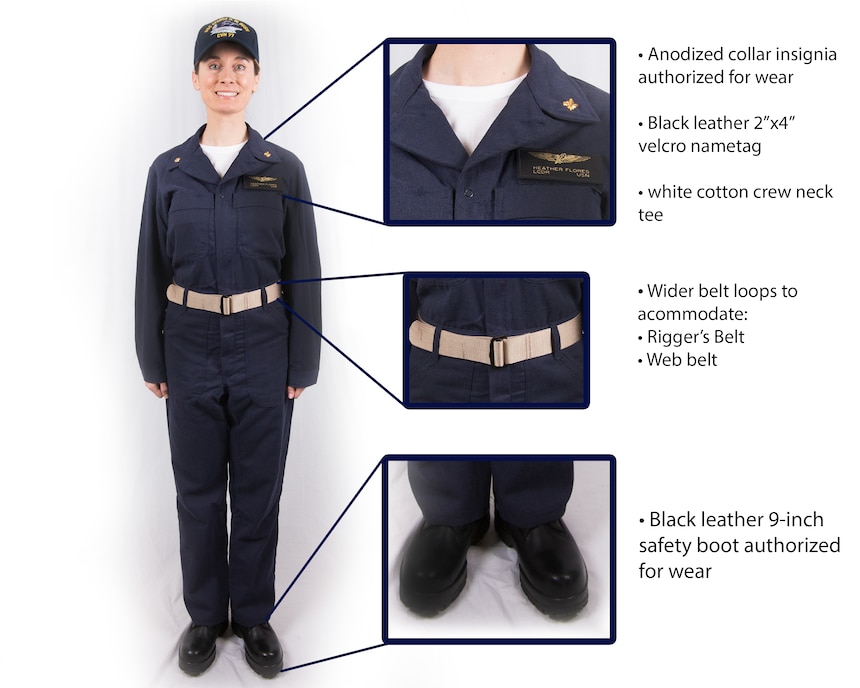
There are also supplemental allowances added to base salary, such as a uniform allowance.  An enlisted Sailor’s wardrobe includes Dress Blues, Dress Whites, Service uniforms, camo-style Type III Working uniforms, and, if on a ship, Coveralls.  Sailors are expected to have at least one of each Dress uniform, two Service uniforms, three Type III uniforms, and three Coveralls.  There are also accoutrements to the various uniforms, from the proper footwear to straps to hold dress shirts in place to rank and rating patches – all of which the Sailor must pay for.  Being American made, uniforms are expensive; and service members are expected to keep them well maintained – dry cleaning is recommended for Service uniforms.  Plus, one must remember many of those entering the military are teenagers who are still growing and will need replacement uniforms.  If the Sailor keeps in good shape and maintains his uniforms, they won’t have to be replaced as often and he can keep the unspent allowance.  This encourages military personnel to be thrifty and healthy by taking good care of their clothes and their bodies.

Once promoted to E-5 (Sergeant or Petty Officer 2nd Class), they are moved out of the barracks and provided with a housing allowance.  That’s what happened with my dad when he was promoted to PO2 in the 1950s, and that’s what happened to my young sailor friend when he was promoted to the same rank in 2023.  The housing allowance varies based on the cost of living where the sailor is stationed, and my young friend happens to be stationed in one of the most expensive locations in the US.  It’s certainly not his fault that the Navy decided to build one of its largest bases there.   Thus, his housing allowance is relatively high.  The apartment building where he lives is on base and part of a private/military cooperative effort.  In exchange for the convenience of living on base, they take his entire housing allowance.  He’s currently looking for a less expensive apartment off base, which will allow him to pocket any leftover housing allowance and use that money to get a used car.  (My dad rented a room above a woman’s garage.)  If you think that means he’s ripping off the taxpayers, then remember: once he moves off base, his on-base dwelling becomes available to another newly promoted Sailor.   

P2025 proposes to “reform” these types of allowances by making military personnel return any unspent allowance.  This is a false economy because active-duty personnel will not be incentivized to maintain their uniforms and find less expensive housing.  They will simply neglect their uniforms and find the nicest place their allowance will cover.  P2025 also proposes to penalize married military couples who live together by making them share the same housing allowance, even though families require more space than single people.

I recently spoke with my Sailor friend about some of these points.  This person is politically moderate and not affiliated with any party.  But when I advised him of these proposals, his reaction was what you’d expect of a Salty Sailor: “[Unprintable quote redacted.]”

Here’s a fact that Putin enablers among the GOP and lefty-loonies like Jill Stein would like you to forget: America has enemies – two of which pose an existential threat to our nation.  The first of these is Russia.  Putin's stated goal is to reestablish the de-facto empire that existed under the USSR.  True, initially Putin played nice with us after 9/11, but the government over which he seems to have an iron grip has become increasingly hostile since George Bush took us to war with Iraq in 2003.  Trump and his enablers seem content to appease Putin on everything from his brutal invasion of Ukraine to his open interference in our nation’s elections and politics.  Joe Biden is the only President who has strongly stood up to Putin – not Bush 43, not Obama, and certainly not Trump - over whom Putin seems to hold some unspoken power.  As for China, though they are not exactly an enemy, they do not wish us well and mainly have exploited us for their own economic benefit.  Trump makes a big noise about China, but his businesses have benefited from Chinese (and Russian) investment.  Under Joe Biden, China has dropped from America’s number one importer to third place – behind Canada and Mexico. 

We have enemies aside from Russia and China, such as North Korea and Iran, but only Russia and China have the military potential to engage in a war with us which would be catastrophic for the planet.  China’s bullying of Taiwan is surpassed only by Russia’s bullying of Ukraine.  History has taught us the dangers of appeasing bullies.  Prior to 1939, the European powers declined to enforce the Versailles treaty and stood by while Hitler’s Germany rearmed.  Following Kristallnacht, not one European leader spoke out about what happened – only U.S. President Franklin Roosevelt issued a rather tame rebuke.  When Hitler invaded Austria, the world did nothing.  He continued to build his military, ranted about how ethnic Germans were being treated by the Czechoslovakian government (just as Putin would use the supposed mistreatment of ethnic Russians by the Ukrainian government 80 years later) and then was given tacit approval to invade the Sudetenland by Neville Chamberlain. 

Thus, we must maintain the world’s strongest defense as a deterrent to Russian and Chinese military aggression.  Trump and his P2025 supporters are content to throw uncountable money at the military-industrial complex to fill defense contractors' pockets.  But when it comes to the well-being of military personnel, they could not care less.

All branches of the US military are already dealing with shortfalls in recruiting and retention.  With unemployment at historic lows, fewer and fewer want to take on an arduous, potentially hazardous job with low pay.  As the nation moves slowly toward cannabis legalization, few want to subject themselves to periodic urinalysis tests which, if positive, could result in a dishonorable discharge and a blot on their resume.  That’s exactly why President Biden has pushed so hard to raise military pay and improve benefits. 

When I read of P2025’s plans for the military, knowing how they will affect recruitment and retention once implemented, I can’t help but wonder: Who stands to benefit if our military is less prepared; if the ranks are thinned from cratering recruitment and retention; if service members’ morale is low?

America’s enemies, that’s who.   And it would be very interesting to know where the backers of Project 2025, including the Heritage Foundation, are getting their money.  Is there a Russian connection?  Is there a Chinese connection?

Friday, July 12, 2024

1/2 a Summer concert at Severance

The Cleveland Orchestra presented the first of three 2024 Summers at Severance concerts with guest conductor Oksana Lyniv and pianist Inon Barnatan last night.  

Our new dog, Brownie was neutered and microchipped yesterday.  Dan & I brought him home to recover – during which he has to be supervised and must wear the dreaded “cone of shame.”  Daniel had to work early this morning,  so I was only able to attend the first half of the concert.


The concert began just a few minutes after 7:00pm with selections from Leoš Janáček’s The Cunning Little Vixen.  The Cleveland Orchestra presented the full opera, inventively staged, in 2014.  It was so well received that it was revived three years later.  Conductor Sir Charles Mackerras compiled selections from Act I into an orchestral suite, and the music holds up well sans singers and staging.  Lyniv obtained exceptionally clear playing from the strings and the performance as a whole was well paced.  The audience, which was rather noisy at first, settled down within a few minutes (except for two people who annoyingly perused their cell phones) and the music was well received. 


This was followed by Rachmaninoff’s Rhapsody on a Theme of Paganini, which was mostly competently played by Bartanan.  There was little of the elegance heard on the composer’s own recording, nor any of the jazzy sizzle one heard from William Kapell.  The main standout from this performance was from within the orchestra, with string pizzicatos played with uncommon clarity and the brass parts brought off with panache. 


After returning home, I settled down for a quiet evening with Brownie, as we both slept on the family room floor.  He’s slowly learning to navigate stairs while wearing his cone and patiently taking his post-surgery medications.  He’s a good boy.


Sunday, June 30, 2024

Brownie, Daniel, and me – a balancing act

Daniel and I have been a couple for over 18 years and married for nearly 14 years.  With time we have gained perspective on our needs and how we think – both as individuals and collectively.  What I have learned during my previous relationships, and even more in this one, is that for the relationship to succeed both parties must be aware of the other person’s needs and how one’s own actions affect the other person.  Truly, this applies not just to romantic relationships, but to professional relationships and friendships.

Anyone who believes that either Danny or I “wears the pants” in our relationship is sorely mistaken.  We both wear the pants both figuratively and literally – in fact, we’ve even accidentally worn each other’s pants.  Over the last few years, we have agreed to extend to each other mutual and reciprocal veto power.  It’s a power we each use sparingly.  I sometimes wish I’d vetoed a trip we took a couple years ago that led to a period of stress which is still impacting us.  But hindsight is seldom actually 20/20, so it’s difficult to know what our lives would be like if we hadn’t taken the trip in question. 

I recently reminded Danny that he had veto power and should use it if he thought necessary.  Early this month, I saw a post on Next Door from a woman who needed to rehome her eight-month old puppy.  It was a fairly typical scenario: she had a dog, adopted another partly to keep that dog company, but between the two dogs and two children, it became too much.  The resemblance between this dog, Brownie, and our dog Mason, was so striking that it took my breath away.  I told Daniel about it and he was skeptical about adopting another dog – especially a youngster who would need training, further vaccinations, neutering and microchipping.  I countered that, as we were making more money than when we adopted Mason and had recently paid off our mortgage, we had the income.  So, Daniel reluctantly said we could at least meet Brownie. 

The next day, we met with Brownie in a neutral setting.  I immediately noticed how well he got along with the other dog, a Pomeranian.  He was very friendly, and typical of many puppies, has yet to learn not to jump on new human acquaintances.  After a few minutes, I pulled Daniel aside.  As we discussed whether to adopt Brownie, I advised him that if he wanted to veto getting a dog, then there would be no hard feelings on my part.  He thought about it for a moment, then gave his consent.  I spoke to the lady and agreed to adopt Brownie and pay the modest rehoming fee she wanted, provided she would share his medical records.  She agreed, texted me the records, and offered his crate as well. 

Top: Mason. Bottom: Brownie. 
The resemblance is striking.

Since then, Brownie has become accustomed to the two of us and we to him.  The first week was a litany of accidents.  But he learned the rules of the house and by the end of that week, we even took him camping with us.  Since then, we've taken him to a restaurant with an outdoor patio and a family member's birthday party.  For a pup of his age, he’s very well socialized.  He had his first visit with our local veterinarian where, after the usual lab tests, he was pronounced “perfect.”   Brownie does not have the confidence that Mason had at his age and he suffers from separation anxiety.  But he’s learning the rules of the house, has dramatically improved on his potty training, and is learning the usual commands of “sit,” “lay down,” and leash manners.  Most important, the bond between Brownie his two humans is strengthening with each day – at times you can feel the Oxytocin flowing.    


Brownie at home with us.

Brownie partying with Daniel's family.

There are the usual stresses with introducing a new element into the household.  But Danny & I communicate our needs with each other, support each other’s quest to continually improve ourselves, check ourselves and each other for shortcomings.  Our mutual and reciprocal veto power is coupled with the wisdom to use it sparingly and only when absolutely necessary. 

Anyone who tries to come between us, who tries to play one of us against the other, does to at their own peril.  Brownie is already learning that lesson.  Spart pup.

Saturday, June 8, 2024

Sunk Costs in Business, in Defense, and in Relationships

“In economics and business decision-making, a sunk cost (also known as retrospective cost) is a cost that has already been incurred and cannot be recovered.”  A succinct description from Wikipedia. 


History is full of investments that were kept going longer than they should have due to the costs already incurred. 


Concorde is one.  At a certain point, the British and French governments realized that they would never recoup their investments in commercial supersonic transport.  Politics and the prospect of elected officials having mud on their collective face for financing the project with taxpayer money prevented those governments from abandoning the project.  While Concorde eventually made money for British Airways and Air France, the taxpayers never recouped their investment and the benefits of Concorde were enjoyed exclusively by the wealthy.  The environmental impact included egregious noise pollution and ozone-depletion.  Concorde flights were abandoned after three decades.  While there are very tentative hopes for a return to commercial supersonic transport, they are unlikely to come to fruition anytime soon – and if they do, will doubtless be enjoyed only by the wealthy.


The United States Navy’s littoral combat ship program is another example.  As someone from a Navy family, I’ve followed developments closely.  But anyone who even casually follows military news knows the problems with the Freedom class and Independence class littoral ships: Engine maintenance problems, a transmission design defect, hull cracks, corrosion problems, very limited life expectancy – about 10 years, which is not a good return on investment. After the first two ships of the Independence class were built and tested, the Navy issued a report that the ships were not performing as expected and that further construction of this class should be abandoned. After all, as Franklin Roosevelt said “It is common sense to take a method and try it. If it fails, admit it frankly and try another.” The ships are not working - cut the Navy's losses and move on. Congress and Senate overrode the Navy’s recommendations and the authors of the report saw their Naval careers ruined.  16 Freedom class and 19 Independence class ships have been built or are in process.  The politicians who were pushing for more Freedom and Independence class ships to be built had received large contributions from, you guessed it, the defense contractors who were building the ships. Meanwhile, many who’ve had to serve on these ships have quipped that the LCR in the registry number stands for “Little Crappy Ship.”  I personally heard a midshipman utter that phrase when I recently visited one such ship. 


Then there are the investments one makes in loved ones that, for whatever reason, don’t yield a return.


Life is a continuous series of investments. 


Investments can be financial, physical, or emotional.


Our lives start, hopefully, with responsible parents who invest in us by ensuring we are healthy: that we receive good nutrition and medical care, including vaccinations. 


As we mature we begin to invest in ourselves: by educating ourselves, eating healthy, getting exercise, avoiding unhealthy vices.


As adults we invest financially: in our homes, by starting a business, by purchasing stocks.


We invest in loved ones by helping them financially or emotionally - often believing in them when few others do.


Helping empower loved ones so they can make the most of themselves is an investment.  Providing assistance without expecting them to try and improve their own lot is charity.


Some investments yield positive outcomes, some do not.  There is no reward without risk.


As with financial investments, there comes a time to assess one’s investments in a loved one.  It can be painful to admit that the investment is not yielding positive results.  But when one accepts this, we must face our own disappointment, and decide whether to keep investing – hoping things will turn around and that it will have been worth the “sunk cost” – or to cut our emotional and/or financial losses, and move on.